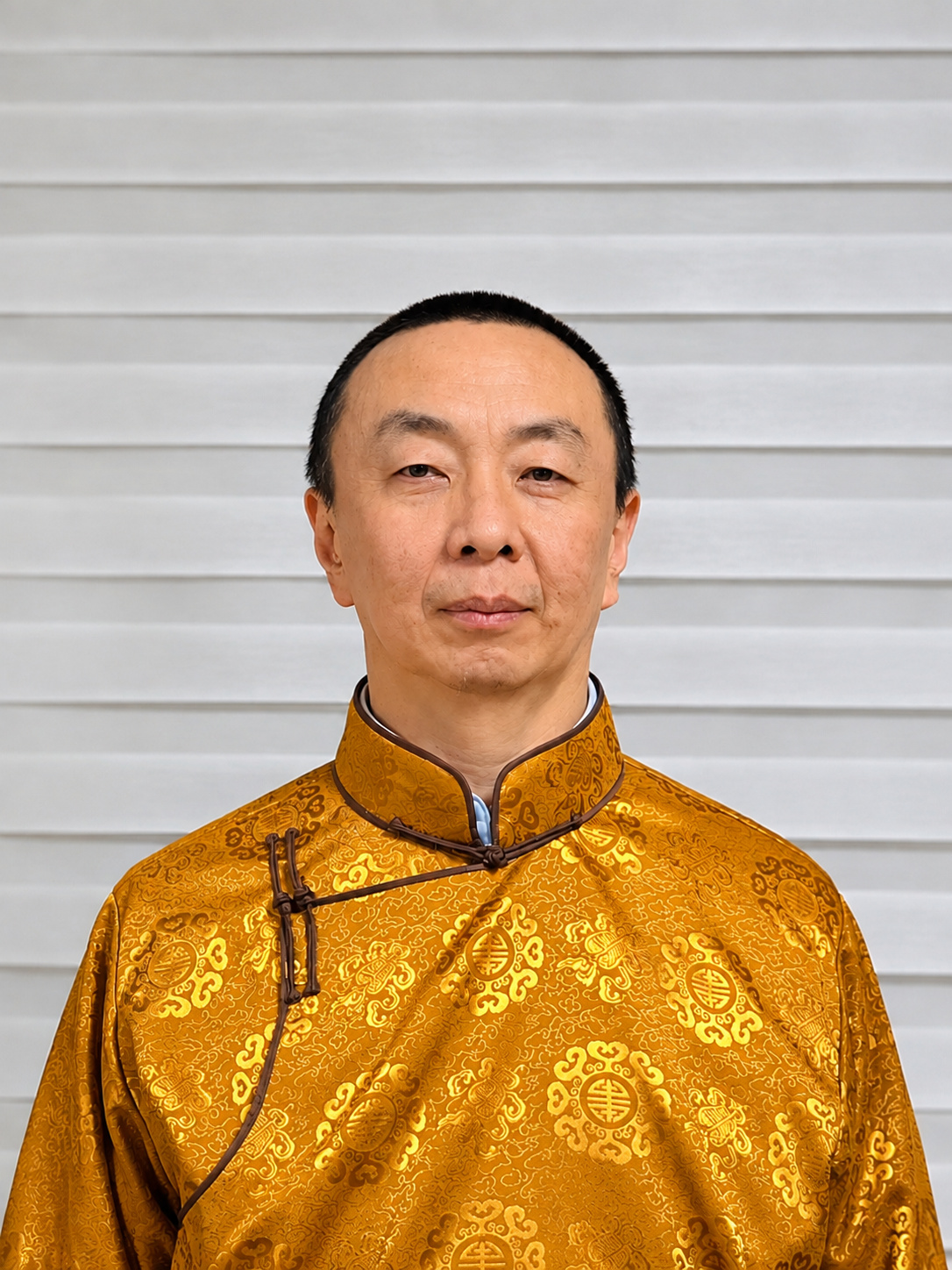
Physician and Qi Gong instructor. Born in Mongolia in 1974, he studied medicine in Türkiye and graduated from Eskişehir Osmangazi University Faculty of Medicine in 2000. For more than twenty years he has practised medicine at his clinic in Eskişehir and taught Qi Gong.
Qi Gong path
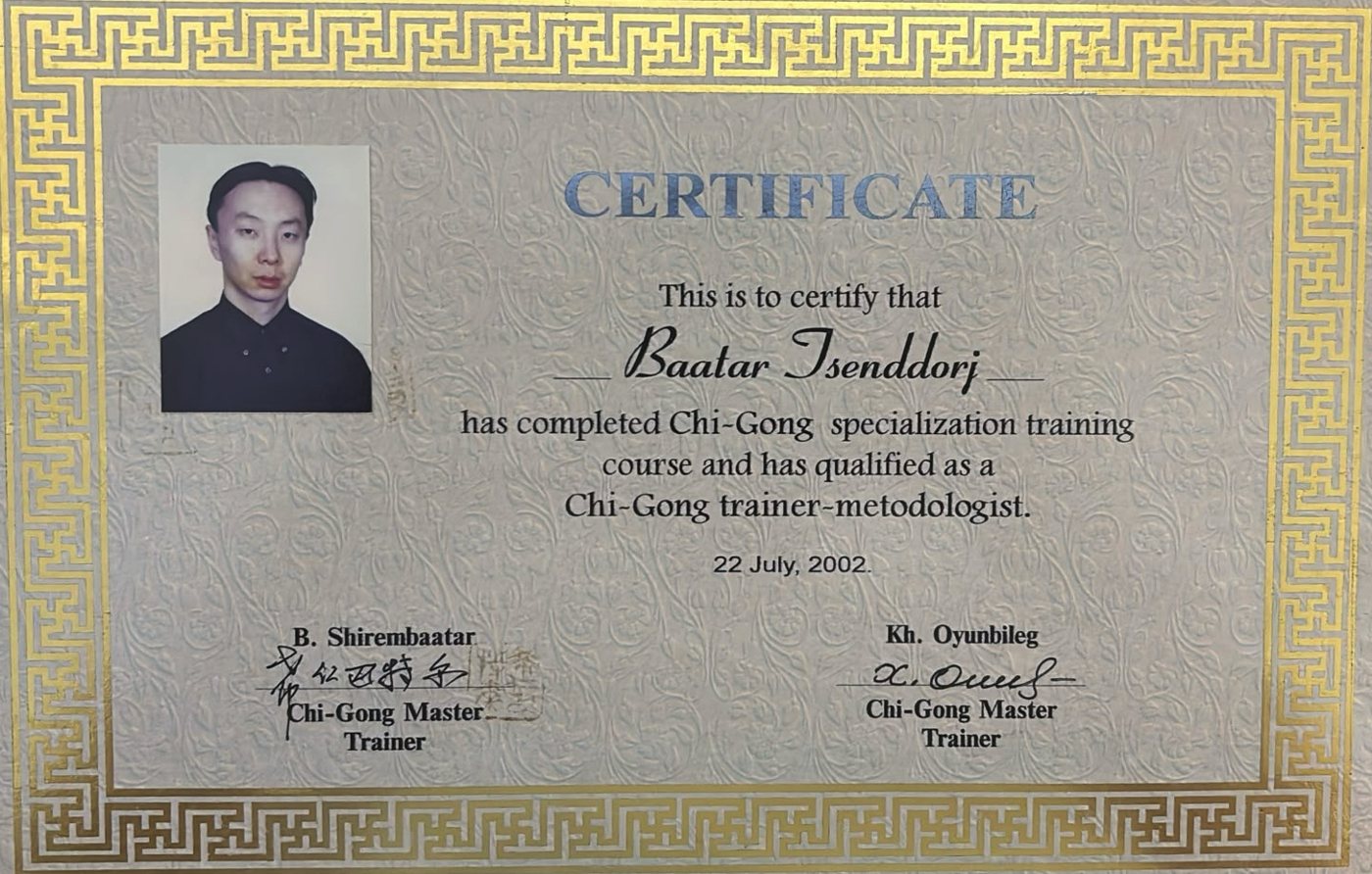
He trained in Qi Gong in Mongolia within the master–apprentice tradition, working individually with the Chi-Gong masters B. Shirembaatar and Kh. Oyunbileg. On 22 July 2002 he completed the specialisation course and qualified as a Chi-Gong trainer-methodologist, a qualification that covers not only practising the movements but teaching them and passing them on as a method.
Complementary medicine qualifications
- Complementary medicine certificate, Ministry of Health of Mongolia (2003)
- Acupuncture certificate approved by the Turkish Ministry of Health (2005)
- Turkish Ministry of Health approved certificates in hypnosis, phytotherapy, ozone therapy, cupping therapy and mesotherapy
His medical background shapes the way he teaches: movements are presented anatomically correctly, safely and within each participant's capacity.
Styles and programmes
He teaches several Qi Gong styles, with the Lotus Flower (Xiang Gong) sequence he received in Mongolia from his teachers B. Shirembaatar and Kh. Oyunbileg at their core; Shirembaatar and Oyunbileg had been teaching this sequence in Ulaanbaatar and Uvs Province since the early 1990s. He also designs Qi Gong exercise programmes for everyday complaints such as a stiff back or neck, tense shoulders, disturbed sleep, stress and shallow breathing.
Teaching approach
For Dr. Bahadır, Qi Gong is a daily practice in which movement, breath and attention work together. In his sessions he demonstrates each movement slowly and clearly, pairs it with the breath and lets every participant progress at their own pace. He values regular repetition over memorisation, which is why QiGong.tr runs live sessions on a regular schedule and keeps the recording of every session available to participants.
At QiGong.tr
He leads the live sessions from Eskişehir, mostly outdoors. Participants join from their homes wherever they are in the world and follow the movements in real time; those who cannot attend watch the recording in their own time. Sessions are taught in Turkish; the platform interface is available in Turkish, English, German, Italian, Russian and Mongolian.