QiGong.TR

Live Qi Gong · from Eskişehir, in six languages

Three times a week,
45 minutes, together.

Dr. Tsenddorj Bahadır leads the sessions live from his garden or his clinic in Eskişehir, or from a chosen spot in nature; you follow at home in front of your screen, doing the same movement at the same moment. The delay is under one second, so when the instructor raises his arm, you raise yours. If you miss a session, its recording is in your account a few minutes after it ends.

45 minper session
<1 sdelay
2×2 mof space
Live sessionsSchedule coming soon

What Qi Gong is

Slow movement, long breath, focused attention

Qi Gong is a form of bodywork shaped in China over centuries. It asks for three things at once: moving the joints through their full range, slowly and with control; matching the breath to the movement, especially by lengthening the out-breath; and gathering attention where the movement happens. The movements call for coordination rather than strength, so age, fitness and flexibility are no obstacle to starting.

The main sequence taught on this platform is Lotus Flower (Xiang Gong). Dr. Bahadır received it from his teachers in Mongolia. It is done standing and the beginner level takes about 15 minutes; the movements consist of the two hands opening and closing, rising and sinking and turning in front of the chest and belly. Breath and attention are not forced in this sequence: the breath keeps its own flow, and the mind follows the movement without locking onto one point. The beginner level can also be practised seated.

What it is not

Not random exercise. The sessions are led by a physician: Dr. Bahadır explains which joint and muscle each movement works, and tells participants during the session who should make a movement smaller and who should avoid it.

Not a martial art. It is related to Tai Chi but has none of Tai Chi's long forms or self-defence roots; the movements are short, repeated and meaningful on their own.

No belief required. "Qi" is a traditional way of speaking; here, what a movement does in the body is explained anatomically, and no belief is expected.

Styles and programmes

Not one sequence, but a path that fits your needs

Qi Gong is not a single sequence of movements; over the centuries many styles have taken shape for different purposes.

Several Qi Gong styles

Dr. Bahadır teaches several Qi Gong styles, with Lotus Flower (Xiang Gong) at their core. Some styles are standing and flowing, some are done seated and centre on the breath, some rest on repeating a single movement for a long time. In live sessions and in the recording archive, the style being practised is written in the title of each session, so you can choose what suits you and progress.

Exercise programmes for everyday complaints

Exercise programmes built from Qi Gong movements are prepared for everyday complaints such as a stiff back or neck, tension in the shoulders, disturbed sleep, stress, shallow breathing or the fatigue that comes from sitting still for long periods. Each programme combines movements that work the area concerned without straining it, together with a matching breathing rhythm.

How a session works

45 minutes, step by step

Every session follows the same structure. Because the order never changes, after the third week you can follow without looking at the screen.

0–5min
Stance and preparationFeet shoulder-width apart, toes turned slightly inward, body relaxed, a light smile on the face. The breath is left to its own flow and is not counted. As preparation, the palms open and close in front of the chest.
Preparation
5–15min
Joint openingFrom the neck down to the ankles in order: head turns, shoulder circles, waist turns, hip circles, knees and wrists. 8 repetitions per joint. The aim is to loosen the joints before the main sequence.
Warm-up
15–33min
Lotus FlowerThe 15 movements of the beginner level, 36 repetitions each. The movements are done in order and the order is not changed; the hands do not rise above shoulder height. In the first weeks the pace is kept slow.
Main sequence
33–38min
Gathering QiThe hands rise and sink slowly with the breath. Then the palms are rubbed together to warm them, and the face, head, ears, neck, shoulders, chest, lower back and legs are stroked in turn.
Closing
38–45min
QuestionsThe instructor takes questions about the movements and speaks to those whose posture needs correcting. The session ends here; do not drink cold water straight after practice.
Closing

Example style: Lotus Flower (Xiang Gong)

The 15 movements of the beginner level

The names are those of the tradition Dr. Bahadır received from his teachers in Mongolia. Each movement is done 36 times; the hands work in front of the chest and belly and do not rise above the shoulders.

1movement
Golden Dragon Wags Its TailFingertips close together, palms facing forward. With the trunk still, the hands sway to both sides.
In front of chest
2movement
The Bird on the Wall Nods Its HeadThe joined hands move up and down in front of the chest; the head follows lightly.
In front of chest
3movement
The Golden Frog Spreads a Pure FragranceThe hands form a triangle in front of the chest; its tip is turned downward, then upward again.
In front of chest
4movement
The Holy Teacher Accompanies the WalkerPalms down, elbows bent; the hands open to the sides and return to the starting position.
In front of chest
5movement
The Holy Teacher Sways to Both SidesPalms up, elbows slightly bent; the hands open to the sides and return to the starting position.
In front of chest
6movement
The Almond Blossom Sways in the WindPalm centres facing each other, the hands push to the sides about 20 cm from the body; the trunk stays still.
In front of chest
7movement
Turn Heaven and Earth to the LeftThe hands, in front of the chest about 20 cm from the body, circle to the left.
In front of chest
8movement
Turn Heaven and Earth to the RightThe same movement, this time to the right.
In front of chest
9movement
The Holy Teacher Rows Across the SeaPalms down, the hands reach forward and come back towards the body turning as if rowing.
In front of chest
10movement
The Holy Teacher Turns SwiftlyRight hand above the left, palms down; the outstretched hands draw circles.
In front of chest
11movement
The Holy Teacher Travels by PlaneWith the same hand position and the chest still, the hands sway to both sides.
In front of chest
12movement
A Clean Wind Revives the EarsElbows slightly bent; the hands move up and down with the hollow of the palms lined up with the ears.
Ears
13movement
The Holy Teacher's Light Brightens Both EyesThe fingers join in the shape of a bud; the hands approach the eyes and sink again without touching them.
Eyes
14movement
Freeing All Beings from SufferingPalms facing each other, the hands cross in front of the lower belly and open to the sides.
In front of belly
15movement
The Bird Prays to the Holy TeacherPalms joined, fingertips touching; stand calmly for 1–3 minutes without thinking of anything.
Stillness
Origins, all movements and rules of the sequence

What you need at home

A screen and four square metres

Space and floor

Enough room to stretch your arms out and turn without hitting anything: about 2×2 metres. The floor should not be slippery; a carpet, or a wooden floor in bare feet, is fine; tiles in socks are not. No mat needed.

Device and connection

A phone, tablet, laptop or a computer connected to your TV; an up-to-date browser is all you need, no app. A download speed of 5 Mbit/s is enough for the picture. If your connection weakens, the picture quality drops automatically and the sound is kept.

Time and clothing

Sessions run on Turkish time; your schedule shows them converted to your own time zone. Comfortable clothing that does not press on the waist, and bare feet or thin-soled shoes. Avoid a heavy meal before the session.

Weekly rhythm

Three sessions, three different emphases

Times in Europe/Istanbul · your own time zone in your account
1Tuesday
Lotus Flower: beginner level45 min · standing · The core session of the week. Preparation, all 15 movements (36 repetitions each) and gathering Qi. Beginners progress with this session in their first months.
Example
2Thursday
Lotus Flower: seated40 min · on a chair · The 15 beginner movements are practised seated. For those who find standing for long difficult and for those just learning the sequence.
Example
3Saturday
Review and questions60 min · The sequence once from start to finish, then participants' questions about the movements. If you turn on your camera, the instructor can see and correct your posture; turning it on is optional.
Example

This schedule is an example; the exact days and times are announced by the instructor. Changes are sent to the e-mail address registered to your account.

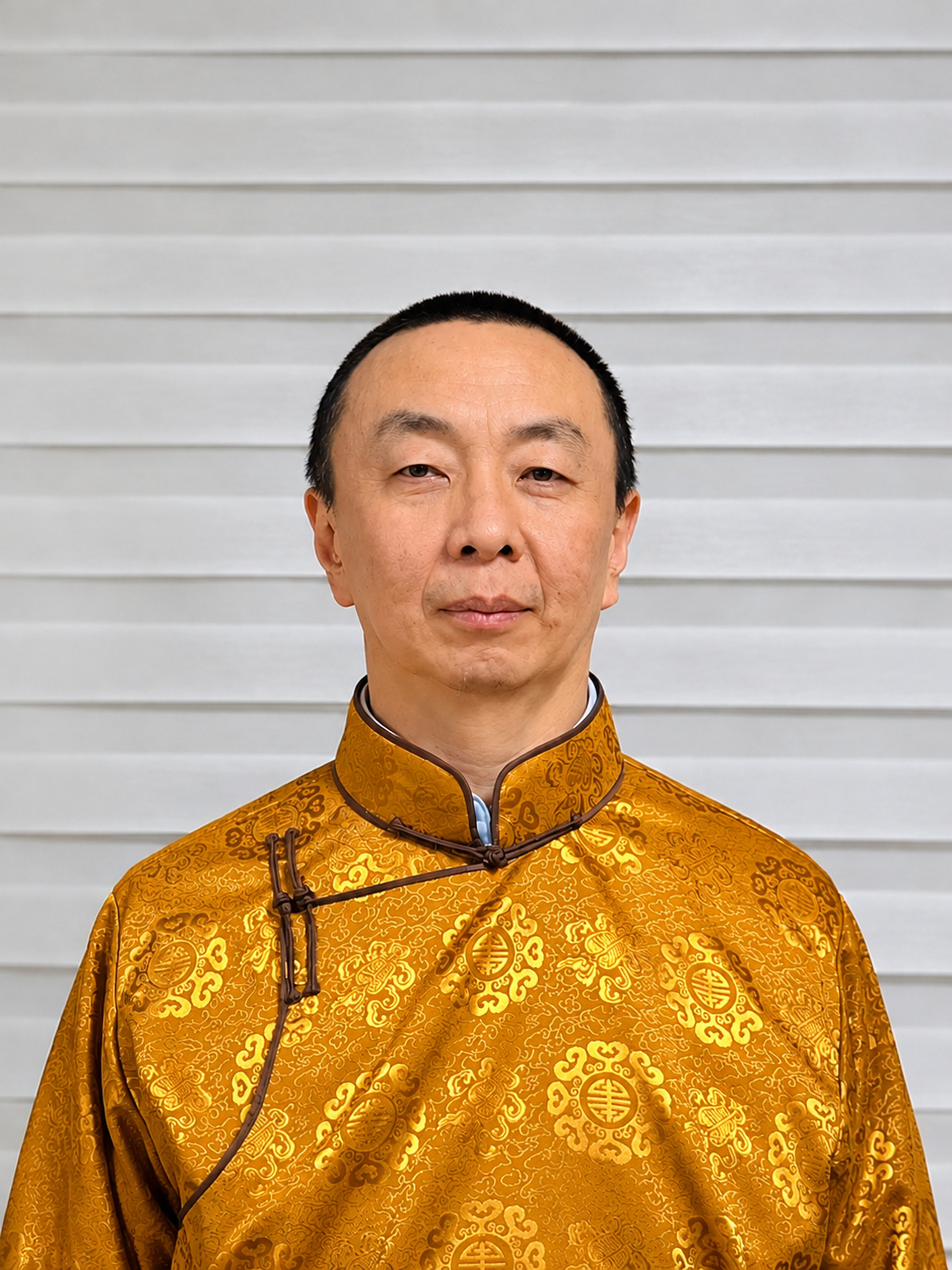
Dr. Tsenddorj Bahadır

Instructor

Dr. Tsenddorj Bahadır

Born in Mongolia in 1974, he completed his medical studies at Eskişehir Osmangazi University (2000). He learned Qi Gong in Mongolia, working individually with the Chi-Gong masters B. Shirembaatar and Kh. Oyunbileg, and qualified as a trainer-methodologist in 2002. For more than twenty years he has practised medicine at his clinic in Eskişehir.

Being a physician shapes how he teaches: he explains each movement in terms of which joint works through which range, tells participants who should make a movement smaller, and stops anyone who is straining during the session.

Chi-Gong trainer-methodologist · Mongolia, 22 July 2002
Medical doctor · Osmangazi University Faculty of Medicine, 2000
Complementary medicine · Ministry of Health of Mongolia 2003; acupuncture, Turkish Ministry of Health 2005
Full biography and certificates

How the live session works

Behind the screen

Picture and sound

The instructor's camera broadcasts in 1080p; the picture you receive is 1080p, 720p or 540p depending on your connection, and switches automatically. The delay is under one second. The instructor's voice is picked up by a separate microphone, so it stays clear outdoors too.

Your camera

Turning on your camera is optional. If you do, your picture goes to the instructor only; other participants see neither you nor your name. The instructor can check your posture and give spoken guidance. You can turn the camera off at any time during the session.

Recording

Every session is recorded on our server. The recording contains only the instructor's picture and sound; participants' cameras are not recorded. A few minutes after the session ends, the recording is processed, added to the archive, and a "your recording is ready" e-mail goes to those who missed it. Recordings are watched online and cannot be downloaded.

Reminders and schedule

You receive an e-mail when a session is scheduled, 24 hours before it and just before it starts; the link in the e-mail takes you straight to the room. Times are converted to your time zone; whether you are in Berlin, Ulaanbaatar or anywhere else, the e-mail and your account show the session in your local time.

Membership

One membership, every session and the archive

Prices in EUR · TRY

Monthly

$60/ month

About 12 live sessions a month and the full archive. Ends automatically at the end of the period.

  • Three live sessions a week
  • All session recordings and the lesson archive
  • Schedule and reminders in your own time zone
  • Auto-renewal is optional and can be turned off with one click
Start monthly
2 months free

Yearly

$600/ year

Works out at $50 a month. Even if prices change during the year, your period is not affected.

  • Everything in the monthly membership
  • 12 months of uninterrupted archive access
  • One payment, no charges during the year
  • Auto-renewal at year end is your choice
Start yearly

Prices include VAT. Pay by card (3D Secure) or bank transfer; card details are stored by iyzico and never reach us. Because the membership starts immediately upon payment, there is no statutory right of withdrawal and payments are not refunded; see the Cancellation and Refund Policy for details.

Frequently asked

Before you start

I have never done Qi Gong. Will I get lost in a live session?

In your first two sessions you will probably miss half of the movements; that is normal and the instructor knows it. Every movement is first shown on its own and then done together. Whatever you missed is in the recording; watching the same recording twice teaches more than joining a new session. After the third week the sequence starts to feel familiar.

I have a health condition. Can I take part?

Yes. Dr. Bahadır is a physician and adapts the movements to each person during the sessions: he tells some to make a movement smaller, some to do it seated, and some to avoid a particular movement. If you have a specific concern, for example with blood pressure, balance, your lower back or knees, you can write to us via the Contact page before the session and your programme will be suggested accordingly.

I am older and cannot bend down to the floor.

The beginner level of Lotus Flower is done with the arms and hands only; there is no bending, and it can also be practised seated. The Thursday session is already held on a chair. The intermediate level, which works the knees and lower back, is done standing; you move on to it after practising the beginner level regularly for a few months.

I do not speak Turkish.

Sessions are taught in Turkish, but Qi Gong is a visual practice: you watch the instructor and move at the same time. The platform, the reminder e-mails and the movement descriptions on this page are available in six languages, so you can read about the movements in your own language before the session.

The session time does not suit me.

Session times are shown in your own time zone in your account and in reminder emails; no single hour suits every time zone at once. The recording of every session you miss is in your account within minutes and stays available for as long as your membership lasts. Practising from a recording costs you only one thing compared with live: the instructor's real-time correction of your posture. The Saturday session is set aside for that.

My internet connection is weak.

Picture quality drops automatically to match your connection; even at 2 Mbit/s you get a 540p picture and uninterrupted sound. If the connection drops completely, the page reconnects automatically and you continue where the session is. Because the recording is made on the server, a drop on your side does not affect it.

How do I end my membership?

The membership ends automatically at the end of its period; you do not need to do anything. If you chose auto-renewal when paying, simply turn off the switch in your account; your remaining days continue unchanged. We remind you by e-mail seven days before every renewal.

Three live sessions a week

There is a place for you in the next session.

Start your membership, get a reminder 15 minutes before the session and join the live broadcast.

Start your membershipAsk a question